
Most retirees assume the conservative side of their portfolio is safe. Bonds, balanced funds, and so-called low-risk holdings are supposed to be the steady part — the money you can count on. Yet in many recent market environments, that supposedly safe money has still lost value.
The Market Loss Elimination Method is a simple idea: the money you cannot afford to lose should not be exposed to loss at all. You can still pursue market-based growth with the rest of your portfolio. The goal is not to abandon growth — it is to remove unnecessary loss from the part of your plan that needs to be certain.
Why diversification alone does not eliminate loss
Diversification is a sound principle. Spreading money across different assets reduces how much any single holding can hurt you. But spreading risk is not the same as removing it. When markets fall broadly, a diversified portfolio still falls — sometimes including the bonds and conservative funds you were counting on for stability.
For someone still working, a temporary loss is recoverable. There is time, and there are new contributions. In retirement, the math changes. You are withdrawing money rather than adding it, so a loss during a down year can do lasting damage to your income for the rest of your life.
Separate the money you cannot afford to lose
The first step is clarity, not complexity. Look honestly at your savings and ask a simple question: which dollars must be there no matter what the market does? That is your foundation — the money behind your income, your essentials, and your peace of mind.
Once that money is identified, it can be repositioned into vehicles designed to protect principal rather than chase performance. The aim is to make a loss on that portion structurally impossible, so a bad year in the market never threatens the core of your retirement.
Keep participating in market-based returns
Eliminating loss on your foundation does not mean giving up growth everywhere. The remaining portion of your portfolio can stay invested for the long term, and certain strategies allow the protected portion to still earn returns linked to market performance — with a floor that prevents loss.
This is the balance most retirees are actually looking for: stability where they need it, and opportunity where they can afford it. Certainty first, growth second.
What this looks like in practice
Putting the method to work is straightforward when it is done in the right order.
- Identify where a loss would be unacceptable to your plan.
- Reposition that conservative money to eliminate the possibility of loss.
- Keep longer-term assets invested for growth.
- Review the structure regularly so it continues to match your life.
Frequently Asked Questions
Does eliminating market loss mean giving up growth?
No. The method protects the portion of your portfolio you cannot afford to lose while the rest stays invested for growth. Some protected vehicles still earn returns linked to the market with a floor that prevents loss.
Isn't a diversified portfolio already safe?
Diversification spreads risk across many holdings, which softens losses but does not eliminate them. In broad downturns, even conservative holdings can lose value.
Why does loss matter more in retirement?
In retirement you withdraw money instead of adding it, so a loss during a down year can permanently reduce the income you can draw for the rest of your life.
Rick Kelly is a Certified Senior Advisor (CSA) and Certified Annuity Specialist (CAS), and a vetted safemoney.com advisor. He helps Self-Saved Retirees turn a lifetime of saving into income, principal protection, and peace of mind — with education first and no sales pressure.
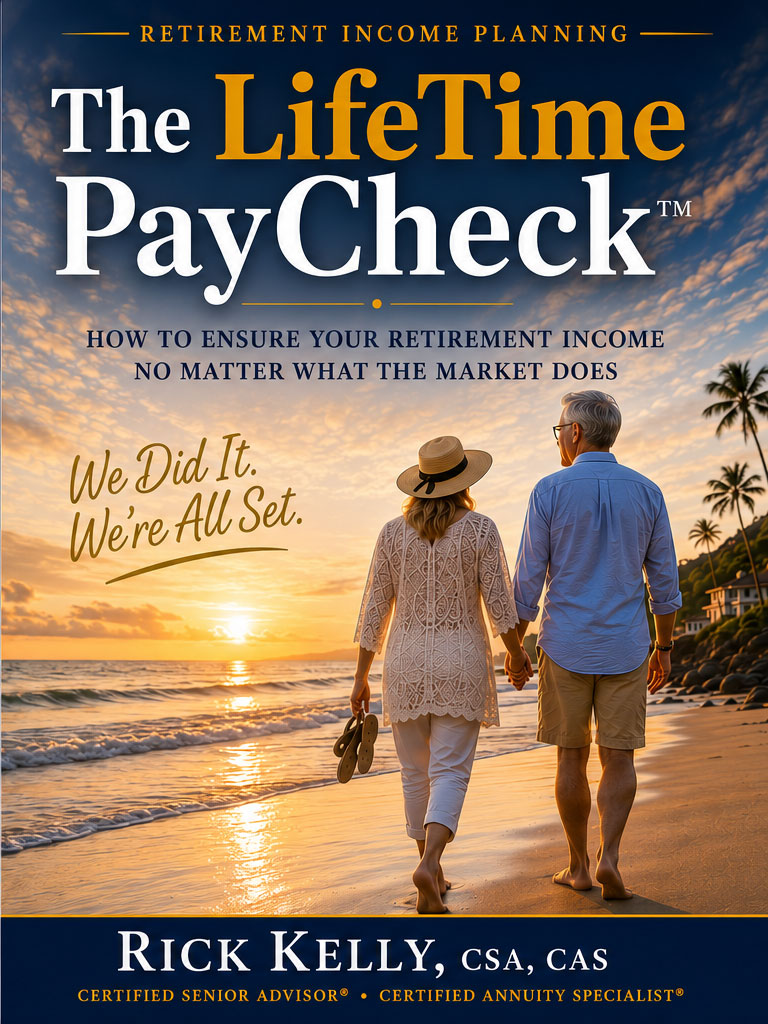
Take the next step toward certainty
Get Rick Kelly's book The LifeTime PayCheck, book a free call, or reach out directly. No sales pressure — just clear, practical guidance.
Put this retirement planning idea into context
Compare Social Security claiming ages, then learn how dependable income and pension replacement planning may fit around the benefit you choose.