If you have lived through market losses or watched your money sit in low-returning accounts, you know the frustration. The instinct is often to take more risk to win it back — but chasing recovery with extra risk can deepen the very problem you are trying to fix.
The Loss Recovery and Earnings Upgrade Method offers a calmer path. Instead of gambling on a comeback, you reposition your money to eliminate future losses and improve your return structure, so you can move forward on stronger footing.
Why chasing losses with more risk backfires
After a loss, it is natural to want to make it back quickly. But adding risk to recover means a second downturn can set you back even further — and in retirement, there may not be time to absorb it. The math of recovery is unforgiving: a large loss requires an even larger gain just to break even.
The healthier question is not how do I win it back fast, but how do I stop losing and build from here with confidence.
Reposition to eliminate future losses
The first move is to stabilize. By repositioning vulnerable assets into vehicles designed to protect principal, you remove the threat of further loss on the money you cannot afford to risk again.
From a stable base, you are no longer starting over every time the market dips. Your foundation holds.
Upgrade your return structure with confidence
Eliminating loss does not mean settling for tiny returns. Certain strategies allow you to pursue improved, market-linked growth with a floor that protects against loss — a better return structure without the exposure that hurt you before.
The outcome is both practical and emotional: a stronger plan, and the confidence to move forward instead of looking back.
- Stop trying to recover losses by adding risk.
- Reposition vulnerable assets to eliminate future loss.
- Pursue an improved return structure with downside protection.
- Move forward from a stable, confident foundation.
Frequently Asked Questions
Should I take more risk to recover my losses?
Generally no. Adding risk to chase a recovery means another downturn can set you back further. A steadier approach is to eliminate future losses first, then upgrade your return structure with protection in place.
Can I improve returns without risking more loss?
Yes. Certain strategies pursue improved, market-linked growth with a floor that protects principal, so you can seek better returns without the exposure that caused the loss.
Why is recovering losses harder in retirement?
In retirement you are withdrawing money and have less time to recover, so a large loss is harder to make back and can affect income for the rest of your life.
Rick Kelly is a Certified Senior Advisor (CSA) and Certified Annuity Specialist (CAS), and a vetted safemoney.com advisor. He helps Self-Saved Retirees turn a lifetime of saving into income, principal protection, and peace of mind — with education first and no sales pressure.
Take the next step toward certainty
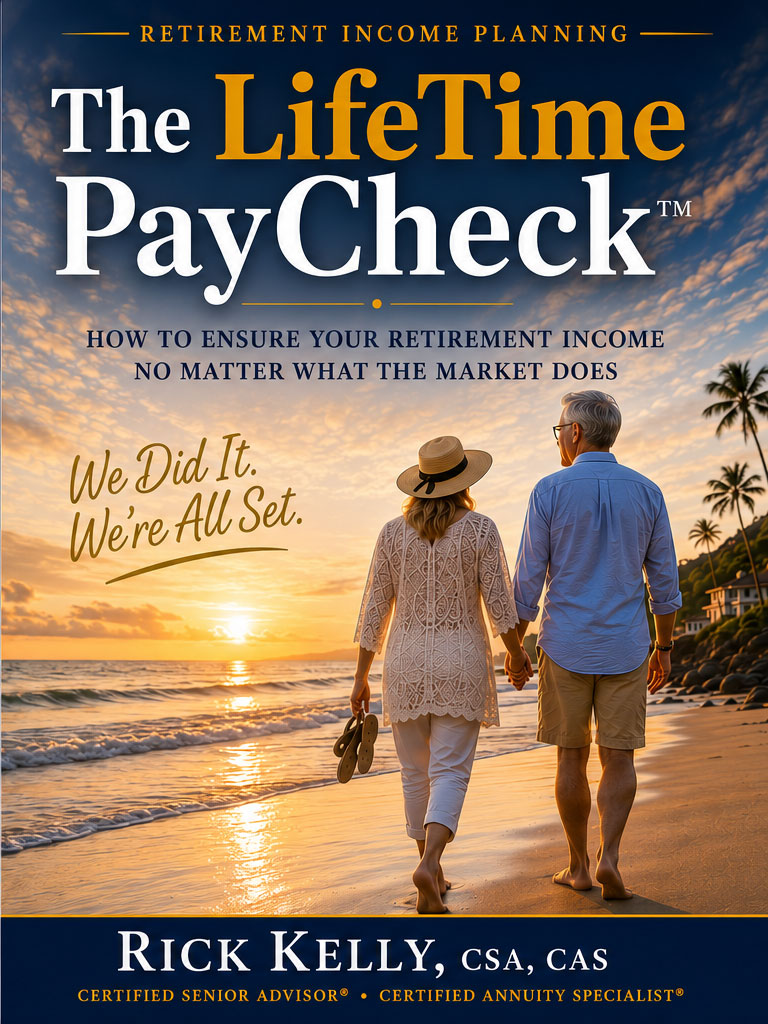
Get Rick Kelly's book The LifeTime PayCheck, book a free call, or reach out directly. No sales pressure — just clear, practical guidance.
Put this retirement planning idea into context
Compare Social Security claiming ages, then learn how dependable income and pension replacement planning may fit around the benefit you choose.